ANNA or ONNA
(c.640-54)
Son of Eni; godfather of Cenwalh, exiled king of Wessex. Onna was
later exiled himself and afterwards killed in battle by Penda (HE III, 18; ASC
654). There is a long-standing view that this battle was fought at Bulcamp,
just across the river to the north of Blythburgh.
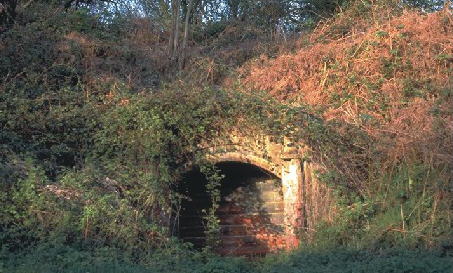
This early nineteenth-century travellers' rest in Springhole Lane, Bulcamp,
is said to have been built over the site of a spring which was once believed to
have miraculously appeared on the spot where Onna was killed in the battle
[author's photograph; thanks to to Mr Johnceline of Wenhaston for this
information].
He was buried at nearby Blythburgh, either on the site
of the later great church, or in the priory area to the east, where his tomb was still being venerated by
pilgrims in the twelfth century (Liber Eliensis).
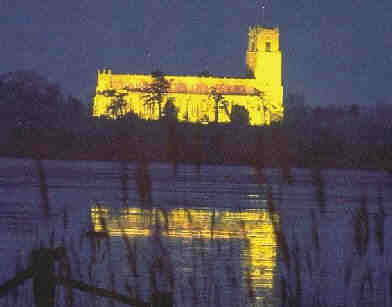
Stephen Wolfenden's magnificent photograph of Blythburgh Church by night
King Onna might be identified with the 'King Æþelmund' of Abbot Folcard's Life of
St Botolf . Certainly the form of the compound name Æþel-mund is precisely
consistent with those of all Onna's brothers,
Æþelric, Æþelhere, and Æþelwald. As Anna (Bede's spelling) or Onna (the form in the Anglo-Saxon
Chronicle) seem likely to be variants of the same nickname, the fuller version of his
name may well have begun with Æþel.
Folcard also implies that his queen may have been named
Sæwara.
He was father of a saintly progeny:
St Jurmin, St Seaxburh, St Wihtburh, St
Æthelburh, St Æthelthryth, and a step-daughter, St
Sæthryth.
Back to Section B of the
Wuffing genealogy
or Back to Graphic Version
© Copyright Dr Sam Newton, Blotmonaþ AD 2000